
Placemat and napkin sets are more than just functional dining accessories; they’re crucial elements in setting the mood and tone of any meal. From casual gatherings to formal events, the right choice of placemats and napkins can elevate the dining experience, reflecting personal style and cultural nuances. This comprehensive guide delves into the world of placemats and napkins, exploring everything from material selection and design trends to maintenance and creative applications.
Understanding the interplay between materials, design, and cultural significance is key to making informed choices. The guide explores how different materials, such as cotton, linen, and bamboo, affect durability, care, and environmental impact. It also delves into the evolving trends in design, from traditional patterns to modern minimalism, and how these choices contribute to the overall dining ambiance.
Overview of Placemat and Napkin Sets
Placemat and napkin sets are essential elements of fine dining and everyday table settings. They add a layer of sophistication and visual appeal, protecting surfaces and enhancing the overall dining experience. These sets serve a dual purpose: practical utility and aesthetic enhancement. Their selection is critical to creating a desired ambiance, from a casual gathering to a formal affair.Placemats and napkins, when chosen thoughtfully, contribute significantly to the overall dining experience.
The materials used, styles selected, and overall design impact the longevity, practicality, and aesthetic appeal of the entire setting. Understanding the various options available allows consumers to make informed decisions, ensuring a perfect match for their needs and preferences.
Materials Used in Placemat and Napkin Sets
Placemats and napkins are crafted from a diverse range of materials, each offering unique characteristics in terms of durability, aesthetics, and care requirements. Common materials include cotton, linen, bamboo, and plastic. The choice of material directly influences the look, feel, and longevity of the set.
- Cotton placemats and napkins are widely accessible and generally affordable. Their soft texture makes them comfortable to use. However, they may not be as durable as other options and require careful care.
- Linen placemats and napkins are known for their elegance and durability. They offer a sophisticated aesthetic, holding up well over time with proper care. However, they tend to be more expensive than cotton options.
- Bamboo placemats and napkins are gaining popularity for their eco-friendly nature. They are often a good alternative for those seeking both style and sustainability. Bamboo’s natural resistance to stains and moisture makes it a practical choice, though it might not match the luxurious feel of linen.
- Plastic placemats and napkins are the most affordable and durable option. They are easy to clean and maintain. However, they may not offer the same aesthetic appeal as natural fibers.
Styles and Designs of Placemat and Napkin Sets
The design and style of placemats and napkins significantly influence the overall table setting. Formal, casual, modern, and rustic styles are common choices, each with unique characteristics. The selected design often complements the overall theme of the dining space.
- Formal placemats and napkins often feature intricate designs, rich colors, and luxurious materials like linen. They are ideal for special occasions and formal dinners.
- Casual placemats and napkins typically have simpler designs, are often made of cotton or durable plastic, and are suitable for everyday use and casual gatherings.
- Modern placemats and napkins often incorporate clean lines, neutral colors, and contemporary patterns, creating a sleek and minimalist aesthetic.
- Rustic placemats and napkins are characterized by natural tones, textures, and patterns inspired by nature, like wood or woven materials. They create a warm and inviting atmosphere for casual dining.
Durability and Care of Different Materials
The durability and care requirements of placemats and napkins vary significantly based on the material used. Proper care ensures longevity and maintains the aesthetic appeal of the set.
| Material | Durability | Care Instructions |
|---|---|---|
| Cotton | Moderate | Machine washable, low heat drying |
| Linen | High | Hand wash or gentle machine wash, low heat drying, ironing recommended |
| Bamboo | High | Machine washable, low heat drying, spot clean |
| Plastic | Very High | Dishwasher safe, wipe clean |
Purpose and Function
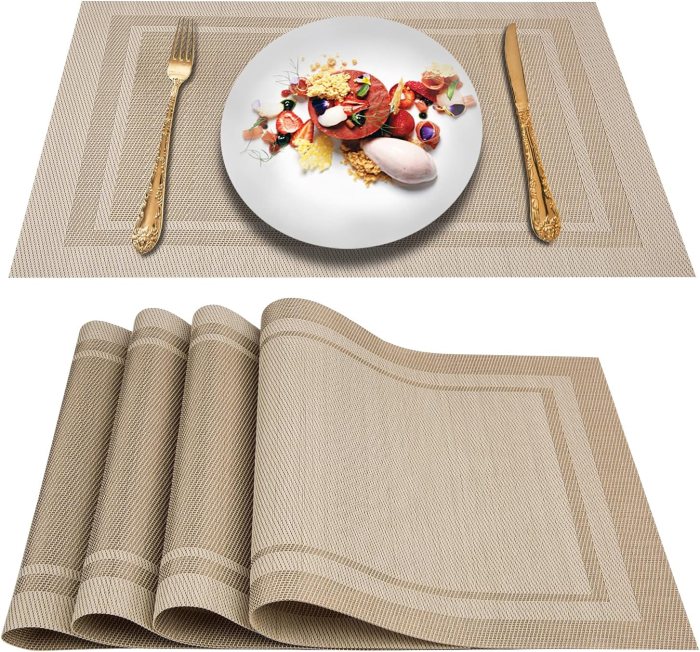
Placemats and napkins, seemingly simple accessories, play a crucial role in enhancing the dining experience. Beyond their practical function, they contribute significantly to the overall atmosphere and aesthetic appeal of a meal. Their strategic use can transform a casual gathering into a sophisticated affair or a formal dinner into a relaxed and intimate experience.Beyond basic utility, placemats and napkins are powerful tools for setting the tone and reflecting the desired dining style.
Their selection and arrangement communicate a message to guests, influencing their perception of the occasion and the host’s intentions.
Primary Function in Dining Settings
Placemats and napkins serve fundamental purposes in a dining setting. Their primary function is to protect surfaces from spills and stains, while simultaneously adding an element of sophistication and style to the table. This dual role is crucial for creating a pleasant and seamless dining experience, whether for a casual family meal or a formal business dinner.
Contribution to the Dining Experience
These sets contribute significantly to the dining experience. They not only safeguard surfaces but also elevate the visual appeal of the table, setting a welcoming and appealing ambiance. The choice of placemats and napkins can subtly influence the mood and perception of the meal.
Role of Placemats in Table Protection and Aesthetics
Placemats are designed to protect tabletops from damage caused by spills, scratches, and heat. This is especially important in high-traffic dining areas or when serving food with potential for spillage. Beyond this practical role, placemats play a significant role in enhancing the aesthetic appeal of the table setting. They add a layer of visual interest, complementing the overall design and contributing to the overall ambiance.
Reflecting Different Dining Styles
Different placemat and napkin sets can be used to reflect various dining styles. A simple, understated set might suit a casual family meal, while a more elaborate set with intricate patterns or textures could be ideal for a formal dinner party. The use of contrasting colors and patterns can also reflect the specific occasion or theme of the meal.
Consider the choice of material, from sturdy woven fabrics to delicate linen, which can also reflect the dining style. For instance, a linen placemat and napkin set with subtle embroidery can suggest a more sophisticated and elegant dining experience, while a patterned plastic set might suit a more casual and relaxed environment.
Examples of Placemat and Napkin Sets for Different Occasions
| Occasion | Placemat Style | Napkin Style | Overall Impression |
|---|---|---|---|
| Casual Family Dinner | Simple, patterned cotton | Solid-colored cotton or linen | Relaxed and inviting |
| Formal Business Dinner | Elegant, textured linen | Crisp white linen | Sophisticated and professional |
| Birthday Party for Children | Brightly colored, cartoon-themed | Fun, colorful paper napkins | Playful and celebratory |
| Romantic Dinner for Two | Soft, textured linen in muted colors | Embroidered linen napkins in complementary colors | Intimate and romantic |
The table above demonstrates how different placemat and napkin sets can be tailored to specific occasions. The choice should align with the desired mood and atmosphere for the dining experience. The key is to select sets that complement the overall theme and create a cohesive and visually appealing table setting.
Market Trends and Consumer Preferences
Placemat and napkin sets, once relegated to purely functional household items, are now experiencing a resurgence driven by evolving consumer preferences. Modern consumers are increasingly seeking aesthetically pleasing and practical homeware that reflects their personal style and values. This has led to a surge in demand for sophisticated designs, sustainable materials, and carefully considered pricing strategies.The market for placemat and napkin sets is experiencing a transformation from simple practicality to a curated expression of personal style.
This shift is reflected in the growing popularity of sets that incorporate both visual appeal and environmental consciousness. Understanding these trends is crucial for businesses aiming to capitalize on this renewed interest in home décor.
Current Market Trends
The current market for placemat and napkin sets is marked by a renewed focus on aesthetics and sustainability. Consumers are actively seeking sets that complement their home décor while also aligning with their values. The emphasis on quality craftsmanship and design is a key driver in this evolving market.
Popular Design Elements
Consumers are drawn to placemat and napkin sets that offer a balance between functionality and design. Geometric patterns, intricate embroidery, and natural textures are highly sought-after elements. Muted color palettes and minimalist designs are also popular choices, reflecting a trend towards sophisticated and understated home décor. The use of natural materials like bamboo or linen further enhances the aesthetic appeal.
Sustainable Materials
The increasing awareness of environmental concerns is influencing consumer choices. Consumers are actively seeking placemat and napkin sets made from sustainable materials. Bamboo, linen, and recycled materials are gaining traction as environmentally responsible alternatives to traditional options. Companies that highlight the sustainability of their products through clear labeling and transparent sourcing practices are better positioned to attract environmentally conscious consumers.
Pricing Strategies
Pricing strategies play a crucial role in influencing consumer decisions. High-quality sets made from sustainable materials often command a premium price, but they also attract consumers who prioritize both quality and ethical sourcing. However, competitively priced options with appealing designs and functional value remain attractive to a wider market segment. A balanced approach that caters to both high-end and budget-conscious consumers is essential for success.
Styles and Popularity
The popularity of different styles, such as modern and traditional, varies depending on the target demographic. Modern placemat and napkin sets often feature clean lines, minimalist designs, and neutral color palettes. Traditional designs, on the other hand, often incorporate intricate patterns, rich colors, and heirloom-quality materials. The appeal of each style is largely driven by the individual preferences of consumers, and successful businesses cater to both styles with diverse offerings.
Placemat and Napkin Set Combinations

Beyond simple functionality, placemat and napkin sets are crucial elements in establishing a dining area’s aesthetic and ambiance. Careful selection of combinations can elevate the overall dining experience, impacting both the visual appeal and the perceived value of the meal. Strategic choices in color palettes, textures, and patterns contribute significantly to the atmosphere and contribute to a positive impression for guests.The interplay between placemats and napkins extends beyond a mere matching aesthetic.
It’s a thoughtful design decision that communicates a level of sophistication and attention to detail. The visual harmony achieved through these combinations can subtly influence guest perception and create a memorable dining experience.
Matching Sets
A consistent aesthetic is often achieved by selecting placemats and napkins that are part of a cohesive set. This approach guarantees visual unity and a sense of deliberate design. Matching sets typically employ the same color palette, pattern, or texture across both placemats and napkins. This consistency reinforces a sense of elegance and creates a harmonious visual environment, particularly in formal dining settings.
For example, a set featuring a muted ivory placemat with subtle floral patterns and coordinating ivory napkins with the same floral pattern creates a serene and sophisticated atmosphere.
Complementary Colors
Strategic use of complementary colors can introduce a dynamic element into a dining space. Complementary colors, positioned opposite each other on the color wheel, create visual interest and contrast while still maintaining a sense of harmony. For instance, a deep teal placemat paired with crisp white napkins can evoke a sophisticated and contemporary ambiance, whereas a warm burnt orange placemat with cream-colored napkins can evoke a cozy and inviting atmosphere.
The choice of complementary colors should align with the overall theme and desired atmosphere of the dining area.
Texture Variations
Introducing different textures to placemats and napkins can add visual interest and tactile appeal. Smooth, polished placemats can be complemented by textured napkins, or vice-versa. A linen placemat with a slightly rough texture paired with smooth cotton napkins offers a delightful contrast in feel and visual appeal. Conversely, a smooth, ceramic-like placemat can be complemented by linen napkins, offering a sophisticated blend of tactile sensations.
The choice of texture should be in line with the desired ambiance and the overall design aesthetic.
Patterns and Motifs
The use of patterns and motifs on placemats and napkins allows for a greater degree of personalization and creativity. A subtle floral pattern on a placemat can be complemented by a plain napkin, or a geometric pattern on napkins can be balanced with a solid-color placemat. Care should be taken to ensure that the patterns and motifs are complementary and don’t clash or overpower each other.
For example, a placemat with a subtle paisley pattern can be beautifully offset by napkins with a simple, striped design, creating a balanced and engaging visual narrative.
Color Combination Examples
| Color Combination | Effect |
|---|---|
| Deep Teal Placemats & Crisp White Napkins | Sophisticated & Contemporary |
| Warm Burnt Orange Placemats & Cream-Colored Napkins | Cozy & Inviting |
| Muted Ivory Placemats with Floral Patterns & Ivory Napkins with Similar Patterns | Serene & Sophisticated |
| Geometric Patterned Napkins & Solid-Color Placemats | Modern & Balanced |
Maintenance and Care of Placemats and Napkins
Proper maintenance is crucial for extending the lifespan and aesthetic appeal of placemat and napkin sets. Different materials require specific care routines, and understanding these nuances ensures that these decorative elements remain attractive and functional for years to come. Knowing how to clean and care for them prevents premature wear and tear, ensuring they remain a valuable part of the dining experience.Maintaining placemats and napkins involves more than just wiping them down.
The choice of cleaning method directly impacts the longevity and integrity of the material. Careful attention to detail during cleaning is essential to avoid damage and preserve the quality of the sets. A thorough understanding of appropriate care for different materials ensures that placemats and napkins retain their beauty and functionality throughout their useful life.
Care for Various Materials
Placemats and napkins are crafted from a diverse range of materials, each with its own set of care requirements. Knowing the material composition allows for the selection of appropriate cleaning methods. This knowledge ensures that the sets remain in pristine condition. Careless handling can lead to discoloration, damage, or even permanent stains, so understanding material-specific care is paramount.
- Cotton: Cotton placemats and napkins are generally easy to care for. Machine washing in a gentle cycle with mild detergent is often sufficient. Avoid using bleach, as it can fade the color. Air drying is recommended to prevent shrinkage or damage to the fabric. For stubborn stains, a mild stain remover can be used.
Spot clean as needed to prevent the spread of stains.
- Linen: Linen placemats and napkins require a more delicate approach. Hand washing in cool water with mild detergent is the preferred method. Avoid harsh chemicals and excessive scrubbing. Line drying is ideal to maintain the integrity of the linen fibers. For persistent stains, a professional dry cleaner may be necessary.
Spot cleaning with a damp cloth and mild detergent should be done promptly.
- Polyester: Polyester placemats and napkins are known for their durability and easy maintenance. Machine washing in a gentle cycle with mild detergent is suitable. Tumble drying on low heat is acceptable. For stubborn stains, a stain remover can be applied and then washed as normal. Spot cleaning with a damp cloth and mild detergent is also effective.
- Wood: Wooden placemats require special care. Avoid using water or detergents that may damage the wood. A damp cloth or soft brush can be used for cleaning. Dry immediately with a soft cloth to prevent warping. For food stains, blot with a clean cloth and apply a non-abrasive cleaner specifically designed for wood.
Do not immerse the wood in water.
Cleaning and Stain Removal Methods
Appropriate cleaning methods are essential for maintaining the quality and aesthetic appeal of placemats and napkins. Understanding the different cleaning procedures will ensure the longevity of the sets.
- General Cleaning: Regular cleaning prevents the buildup of food particles, grease, and other residues that can lead to stains. Blot up spills immediately to prevent them from setting in. Wipe down placemats and napkins with a damp cloth and mild detergent. Allow the sets to air dry completely to prevent mold or mildew growth.
- Stain Removal: Different materials require different stain removal techniques. A quick response to spills and stains is key. For water-based stains, blot immediately with a clean cloth. For oil-based stains, use a clean cloth to absorb the excess. For more stubborn stains, use a specialized stain remover following the product instructions.
Never rub stains, as this can damage the material.
- Preventing Damage: Regular care can significantly extend the lifespan of placemats and napkins. Store sets in a cool, dry place away from direct sunlight to prevent fading or discoloration. Handle them with care to avoid scratches or tears. Use appropriate protective covers when transporting or storing the sets to prevent damage.
Maintaining Placemat and Napkin Lifespan
Proactive measures are critical to ensure the longevity and optimal use of placemat and napkin sets. Following these steps ensures the sets remain in excellent condition.
- Protective Measures: Protect placemats and napkins from excessive moisture and direct sunlight to prevent fading and discoloration. Use placemat protectors when necessary to prevent stains and scratches. Store them in a cool, dry place to maintain their integrity.
- Proper Storage: Store placemats and napkins in a cool, dry, and dust-free environment. Avoid folding them sharply, which can cause creases and damage. Use protective covers or storage containers to maintain their condition and prevent damage.
Summary Table of Cleaning and Care
| Material | Cleaning Method | Stain Removal | Prevention |
|---|---|---|---|
| Cotton | Machine wash (gentle cycle), air dry | Spot clean, mild stain remover | Avoid bleach, protect from moisture |
| Linen | Hand wash (cool water), line dry | Professional dry cleaning (for stubborn stains), spot clean | Avoid harsh chemicals, protect from moisture |
| Polyester | Machine wash (gentle cycle), tumble dry (low heat) | Stain remover, spot clean | Handle with care, avoid excessive heat |
| Wood | Damp cloth, soft brush, avoid water | Blot with clean cloth, wood-specific cleaner | Protect from moisture, avoid direct sunlight |
Design Considerations for Different Settings
Placemat and napkin sets, more than mere functional accessories, are powerful tools for setting the tone and atmosphere of a dining experience. Careful consideration of design choices, from color palettes to textures, can significantly impact the overall ambiance and guest perception. This section delves into the crucial role of design adaptation for various dining environments, from formal settings to casual gatherings.Design choices for placemat and napkin sets must be tailored to the specific context of the dining environment.
A formal dining room demands a different aesthetic approach than a casual kitchen or a lively party. This adaptation allows the sets to seamlessly integrate into the overall design, enhancing the ambiance and reflecting the desired mood.
Adapting Design to Different Dining Environments
Different dining settings require distinct design approaches. Formal dining rooms benefit from elegant, sophisticated designs, often featuring rich colors, intricate patterns, and high-quality materials. Casual kitchens, on the other hand, can embrace bolder colors, more playful patterns, and simpler designs, reflecting the relaxed atmosphere.
- Formal Dining Rooms: Emphasize sophistication and elegance. Rich colors like deep burgundy, navy blue, or emerald green, paired with intricate patterns or subtle textures, create an air of formality. High-quality materials like linen or silk add to the luxurious feel. Consider using a coordinated placemat and napkin set in a neutral color with an embroidered or damask pattern.
- Casual Kitchens: Focus on comfort and ease. Bright, cheerful colors, like sunny yellow or terracotta, along with simple geometric patterns or bold stripes, create a relaxed and welcoming atmosphere. Durable materials like cotton or polyester are ideal for everyday use in a kitchen setting. A coordinated set in a vibrant color with a simple geometric pattern would be well-suited.
- Outdoor Dining Spaces: Consider weather-resistant materials and colors that complement the outdoor setting. Natural tones like beige, cream, or olive green, paired with natural fibers like jute or bamboo, create a harmonious connection with the environment. For a more sophisticated look, choose a patterned placemat and napkin set in a color that complements the outdoor furniture.
Color Palettes and Mood Evocation
Color palettes play a vital role in shaping the mood and atmosphere of a dining experience. Warm colors like golds and reds can evoke feelings of warmth and festivity, while cool colors like blues and greens can create a sense of serenity and calmness. The choice of color should align with the intended mood of the event or setting.
- Warm Colors: Golds, oranges, and reds can evoke feelings of warmth, energy, and celebration. These are well-suited for special occasions like parties and holidays. A placemat and napkin set in a warm shade of gold with a subtle floral pattern would create a festive ambiance.
- Cool Colors: Blues, greens, and purples can create a sense of calm, serenity, and sophistication. These colors are excellent for formal settings or intimate gatherings. A set in a deep blue with a subtle damask pattern would evoke a sense of sophistication in a formal setting.
Textures and Patterns for Aesthetic Enhancement
Textures and patterns add depth and visual interest to placemat and napkin sets. Smooth linens or textured cotton can create different sensations, while patterns can range from intricate damasks to simple stripes, each adding a unique character to the table setting. The choice of texture and pattern should complement the overall design and atmosphere.
- Linen Textures: Linen creates a luxurious feel, perfect for formal settings. Its natural texture adds a touch of elegance to the table. A placemat and napkin set in linen with a subtle damask pattern would create a formal and luxurious ambiance.
- Cotton Textures: Cotton is a versatile option, offering both durability and a range of textures, from smooth to slightly textured. It can be well-suited for both formal and casual settings, adding a touch of elegance without being overly formal. A placemat and napkin set in textured cotton with a simple geometric pattern would work well for a casual setting.
- Patterns: Patterns add visual interest and personality to the table setting. Intricate damasks, delicate florals, or bold stripes can create a particular mood. For example, a placemat and napkin set with an intricate damask pattern would add a touch of elegance to a formal dinner.
Event-Specific Design Choices
Selecting the right placemat and napkin sets for specific events, like weddings or parties, requires careful consideration of the event’s theme and atmosphere. A wedding, for instance, might call for a sophisticated and elegant design, while a casual party could benefit from a vibrant and playful aesthetic. The sets should enhance the overall theme and ambiance.
- Weddings: A wedding calls for a sophisticated and elegant design. Sets in rich colors, such as ivory, gold, or deep burgundy, with intricate patterns or delicate embroidery, would create a luxurious ambiance. Consider coordinating the placemats and napkins with the wedding theme and colors.
- Parties: For parties, a more vibrant and playful aesthetic is often preferred. Sets in bright colors with bold patterns or unique textures would create a lively atmosphere. Consider choosing sets that complement the party’s theme and decorations.
Table Illustrative of Design Choices
| Dining Setting | Color Palette | Texture | Pattern | Event Suitability |
|---|---|---|---|---|
| Formal Dining Room | Deep burgundy, navy blue | Linen | Damask, floral | Weddings, anniversary dinners |
| Casual Kitchen | Sunny yellow, terracotta | Cotton | Geometric, stripes | Everyday meals, casual gatherings |
| Outdoor Patio | Beige, olive green | Jute, rattan | Subtle floral, nature-inspired | Summer barbecues, garden parties |
History and Cultural Significance
From humble beginnings as simple surfaces to protect tables, placemats and napkins have evolved into intricate symbols of cultural identity and refined dining experiences. Their history is intertwined with societal shifts, technological advancements, and the ever-changing aesthetics of different eras. Understanding their historical context reveals a fascinating story of cultural exchange and artistic expression.
Evolution of Placemats and Napkins
Placemats and napkins, initially functional tools, have become integral elements in dining rituals across the globe. Early placemats were often made of simple materials like wood or woven reeds, providing a protective layer against stains and wear. Napkins, similarly, began as practical tools for cleaning hands and mouths, evolving from rudimentary cloths to exquisitely crafted pieces of artistry.
This evolution mirrors the overall progress of tableware and reflects the growing importance of dining etiquette and social interaction. The materials and designs employed in these items reflect the prevailing technologies and artistic trends of their time.
Cultural Variations in Placemat and Napkin Use
Different cultures have imbued placemats and napkins with unique symbolic meanings and practical applications. These elements are not merely functional; they represent traditions, beliefs, and societal values. The materials, designs, and colors used in these items can convey specific cultural nuances, reflecting the history, values, and aesthetics of a particular society.
Examples of Placemat and Napkin Usage in Different Cultures
In Japan, the use of placemats and napkins often reflects a highly structured and formal approach to dining. Traditional Japanese placemats, often made of lightweight, natural materials like bamboo, are designed for harmony with the environment. The focus is on simplicity and respect for the food and the process of eating. Similarly, in many Asian cultures, the choice of napkin material and design can communicate respect for the host and the dining occasion.
In contrast, some European cultures, particularly in France and Italy, place a strong emphasis on the elegance and aesthetic presentation of placemats and napkins. The design often reflects a more sophisticated and refined aesthetic.
Evolution of Designs Over Time
The designs of placemats and napkins have evolved dramatically over time, mirroring changing artistic styles and technological advancements. Early designs were often simple and functional, reflecting the materials available and the needs of the time. The introduction of new materials, like linen and silk, allowed for more elaborate designs and embellishments, reflecting the changing societal values and artistic tastes.
The use of intricate embroidery, patterns, and colors often denoted wealth and status.
Table: Cultural Variations in Placemat and Napkin Use
| Culture | Placemat Material | Napkin Material | Design Significance |
|---|---|---|---|
| Japan | Bamboo, paper | Fabric, often simple | Simplicity, respect, harmony with nature |
| France | Fine linen, porcelain | Linen, often embroidered | Elegance, refinement, status |
| Italy | Fabric, ceramic | Fabric, often patterned | Emphasis on aesthetics, quality |
| China | Fabric, ceramic | Fabric, often colorful | Respect for the host, occasion |
Materials and Production

The materials used in placemat and napkin sets significantly impact both the environmental footprint and the perceived quality of the product. Sustainable choices are increasingly important to consumers, influencing purchasing decisions and driving innovation in the industry. Manufacturing processes also play a crucial role in determining the longevity and durability of the finished product.
Environmental Impact of Materials
The selection of materials directly correlates with the environmental impact of placemat and napkin sets. Wood-based materials, for example, often rely on sustainable forestry practices, but even these choices vary greatly. Natural fibers like bamboo and linen offer alternatives to traditional wood and plastics, potentially reducing reliance on synthetic materials. Plastics, while offering durability, contribute to plastic pollution.
The production of some synthetic materials requires substantial energy inputs and may release harmful emissions. Consumers are increasingly conscious of these environmental trade-offs, prompting the search for sustainable alternatives.
Sustainable Materials
Sustainable materials are gaining traction in the industry. Bamboo, a fast-growing grass, offers a renewable resource with minimal environmental impact. Recycled materials, like post-consumer plastic or paper, reduce reliance on virgin resources. Natural fibers like linen and cotton, when sourced responsibly, can also be sustainable choices. Companies are exploring innovative ways to incorporate these materials into placemat and napkin sets, creating stylish and eco-friendly options.
Manufacturing Processes
Manufacturing processes vary significantly depending on the chosen material. Wood-based placemats often involve cutting, sanding, and finishing processes. Natural fiber placemats may require weaving, knitting, or other specialized techniques. Plastic placemats frequently use injection molding or thermoforming. The choice of manufacturing process directly impacts the quality and durability of the finished product.
Quality Control and Consistency
Maintaining consistent product standards across different batches is critical for building consumer trust. Quality control procedures ensure that placemats and napkins meet predefined specifications regarding dimensions, material strength, and aesthetics. These processes often include rigorous inspections at various stages of production, from raw material selection to final packaging. Detailed documentation and traceability systems play a vital role in maintaining consistency and addressing any potential quality issues.
Sustainable Material Options and Benefits
| Material | Benefits | Environmental Impact |
|---|---|---|
| Bamboo | Fast-growing, renewable resource, biodegradable, water-resistant | Low environmental impact, reduced deforestation |
| Linen | Durable, naturally hypoallergenic, soft, eco-friendly | Reduced water usage and chemical use compared to cotton |
| Recycled Plastic | Reduces reliance on virgin plastic, minimizes waste | Significantly lowers carbon footprint compared to virgin plastic |
| Recycled Paper | Sustainable alternative to virgin paper, reduces deforestation | Low environmental impact, can be combined with other materials |
The table above showcases a selection of sustainable material options, highlighting their benefits and reduced environmental impact. These materials are increasingly favored by consumers seeking eco-conscious products.
Pricing and Value Proposition
Placemat and napkin sets, like many consumer goods, are priced based on a complex interplay of factors. The perceived value, driven by quality, design, and materials, significantly impacts the pricing strategy. Understanding this intricate relationship is crucial for both manufacturers and consumers to make informed decisions.
Pricing Determination
Pricing placemat and napkin sets involves meticulous consideration of material costs, manufacturing processes, design complexity, and brand reputation. Direct costs, such as the raw material prices for the chosen fabrics or the cost of the manufacturing labor, are a foundation for pricing. Indirect costs, including overhead expenses and marketing costs, are equally important. Often, a markup is applied to cover these expenses and to ensure a profit margin for the company.
Furthermore, the competitive landscape influences pricing; if competitors offer similar sets at lower prices, the company may adjust its pricing accordingly to remain competitive.
Factors Influencing Perceived Value
Several factors contribute to the perceived value of placemat and napkin sets. The quality of materials used plays a significant role; sets crafted from high-quality, durable materials, such as linen or heavy-duty cotton, are perceived as more valuable than those made from less durable materials. Sophisticated designs, intricate embroidery, or unique patterns can elevate the perceived value. Brand recognition and reputation are also influential; well-established brands often command higher prices due to their perceived quality and prestige.
Finally, the overall aesthetic appeal and the ability of the set to complement a specific dining style or interior design contribute to the perceived value.
Price Point Examples
Different price points reflect varying levels of quality and design. Budget-friendly sets often utilize readily available materials like polyester or polypropylene and feature simple designs. Mid-range sets may incorporate cotton or linen with more intricate embroidery or patterns. Premium sets, on the other hand, are crafted from luxurious materials like fine china or high-thread-count cotton, often featuring bespoke designs or unique craftsmanship, which adds to the overall appeal and justifies the higher price.
Importance of Offering Various Price Ranges
Offering a variety of price ranges is essential for catering to diverse consumer budgets and preferences. This allows the company to reach a wider customer base, from budget-conscious consumers to those seeking luxury. Providing a spectrum of options helps cater to different dining settings and occasions, from casual meals at home to formal gatherings. The availability of different price points demonstrates a commitment to customer satisfaction, ensuring there’s a set that meets each individual need and budget.
Price Point Table
| Price Point | Material | Design | Features |
|---|---|---|---|
| Budget-Friendly | Polyester, Polypropylene | Simple, Solid Colors | Basic functionality, machine washable |
| Mid-Range | Cotton, Linen | Moderate complexity, Embroidered | Durable, stain-resistant, machine washable |
| Premium | Linen, Fine China | Intricate Designs, Unique patterns | Exceptional durability, bespoke designs, hand-wash recommended |
Comparison with Alternatives
Placemats and napkins, while seemingly simple, offer a compelling alternative to traditional tablecloths, impacting both aesthetics and practicality in the dining experience. Their versatility and adaptability to various settings make them a popular choice for modern consumers seeking refined yet flexible dining solutions. Understanding their advantages and disadvantages, and how they compare to tablecloths, is crucial for evaluating their true value proposition.The choice between placemats and napkins versus tablecloths often hinges on specific needs and preferences.
Placemats and napkins, with their discrete design, offer a greater degree of customization and a more modern aesthetic. They facilitate easier cleaning and maintenance, particularly in high-traffic environments. Conversely, tablecloths offer a more encompassing, often more formal, presentation, though they might require more elaborate upkeep.
Advantages of Placemats and Napkins
Placemats and napkins, in comparison to tablecloths, offer a clear advantage in terms of practicality and ease of use. Their modular design allows for a tailored aesthetic, allowing for a greater degree of customization. This adaptability extends to different table arrangements, from intimate gatherings to large parties. Cleaning and maintenance are significantly simplified. Spills are easily contained and cleaned, reducing the time and effort required for post-meal upkeep.
Disadvantages of Placemats and Napkins
While placemats and napkins excel in practicality, they sometimes fall short in creating a unified, cohesive look. This can be mitigated by carefully choosing complementary placemat and napkin designs. They might not offer the same sense of elegance or grandeur as a well-chosen tablecloth, especially in more formal settings. The perceived lack of coverage can sometimes present a less polished or casual aesthetic, though this can be balanced with the right selection of materials and design.
Versatility of Placemat and Napkin Sets
The versatility of placemat and napkin sets extends beyond traditional dining arrangements. They are adaptable to various settings and can be integrated into creative displays. For example, they can be used as decorative accents in outdoor dining spaces or as a statement piece on a buffet table. The subtle interplay of patterns and colors can transform a simple meal into a sophisticated event.
Creative Uses of Placemats and Napkins
Placemats and napkins can be utilized in creative ways to enhance the dining experience. They can act as decorative elements in a variety of settings, from casual picnics to elegant dinner parties. The use of contrasting colors or textures can add visual interest, and the arrangement of the placemats and napkins can further highlight the table’s aesthetic appeal.
The combination of different patterns and materials can create a uniquely personalized experience.
Comparison Table: Placemats/Napkins vs. Tablecloths
| Feature | Placemats/Napkins | Tablecloths |
|---|---|---|
| Aesthetics | Versatile, customizable, modern | Formal, unified, elegant |
| Practicality | Easy cleaning, spill containment, adaptable | More susceptible to spills, potentially more difficult to clean |
| Maintenance | Simple, quick | Potentially more time-consuming, potentially more specialized cleaning |
| Versatility | High, adaptable to diverse settings | Lower, generally best suited for formal events |
| Cost | Generally lower, especially with sets | Can vary widely depending on the material and quality |
Creative Applications and Ideas
Placemats and napkins, traditionally confined to the dining table, are finding new life in a multitude of creative applications. Their versatility extends beyond their primary function, offering opportunities for decorative enhancements and unique aesthetic expressions in various settings. From bolstering a home’s ambiance to serving as a canvas for artistic expression, these seemingly simple textiles are revealing a surprising range of creative potential.Beyond the dinner table, placemats and napkins can be used as versatile decorative elements, transforming spaces with subtle sophistication or bold statements.
Their tactile nature and diverse material options allow for a wide spectrum of design choices, opening up possibilities for artistic expression.
Innovative Uses Beyond Dining
Placemats and napkins can serve as more than just functional items. Their material and design lend themselves to a range of applications. For example, they can act as decorative elements in a gallery wall, adding texture and color. Using various textures and patterns, they can create visual interest and visual hierarchy in the space. In a home office, a vibrant placemat can add a pop of color and personality to a workspace.
Decorative Applications
Placemats and napkins are excellent tools for decorative purposes, especially when considering the wide range of materials and patterns available. Their versatility allows them to add visual interest and unique flair to any space. A patterned placemat, for instance, can create a focal point in a living room or a dining area, drawing the eye to a particular piece of furniture or a collection of decorative objects.
Likewise, patterned napkins can serve as a statement piece at a party or event, adding a personal touch and highlighting the theme of the gathering. Color coordination is key; coordinating placemats and napkins with the existing color palette of a room or event can greatly enhance the overall aesthetic.
Creative Projects
Numerous creative projects can be undertaken using placemats and napkins. For instance, placemats can be used to create a unique and personalized gallery wall. Napkins can be used to create artistic table centerpieces or decorative accents for other rooms. Using placemats as coasters for a unique display of decorative objects, and layering different napkin styles for a unique and personalized aesthetic, are additional examples.
Unique Aesthetics in Various Spaces
Incorporating placemats and napkins into the overall aesthetic of a space can elevate the visual appeal of a room. For instance, in a minimalist living room, neutral-toned placemats and napkins can add a touch of warmth and texture without overwhelming the space. Alternatively, in a vibrant dining area, bold-patterned placemats and napkins can inject personality and character. By carefully selecting the materials, colors, and patterns, placemats and napkins can contribute significantly to the overall ambiance and style of any space.
A Table of Creative Applications
| Space | Application | Materials/Design | Aesthetic Impact |
|---|---|---|---|
| Living Room | Gallery Wall Accent | Textured placemats, various colors | Adds visual interest, textural depth |
| Home Office | Workspace Decoration | Vibrant placemat, neutral napkins | Adds personality, visual break |
| Dining Area | Statement Centerpiece | Patterned placemats, coordinating napkins | Creates a focal point, elevates ambiance |
| Party/Event | Themed Decor | Themed napkins, placemats | Creates a cohesive aesthetic, highlights the theme |
Epilogue

In conclusion, placemat and napkin sets offer a compelling blend of functionality, aesthetics, and cultural expression. This guide has provided a thorough overview, examining various aspects from material selection to creative applications, and offering insights into market trends, consumer preferences, and the historical context. Ultimately, the choice of placemats and napkins is a personal one, reflecting individual taste and the desired atmosphere for any dining occasion.
